You already have a plant with a battery
We add the optimiser above your existing controller and connect to the battery and the inverters you have, over Modbus and OPC UA, from any vendor. Nothing that works gets replaced.
Weeks
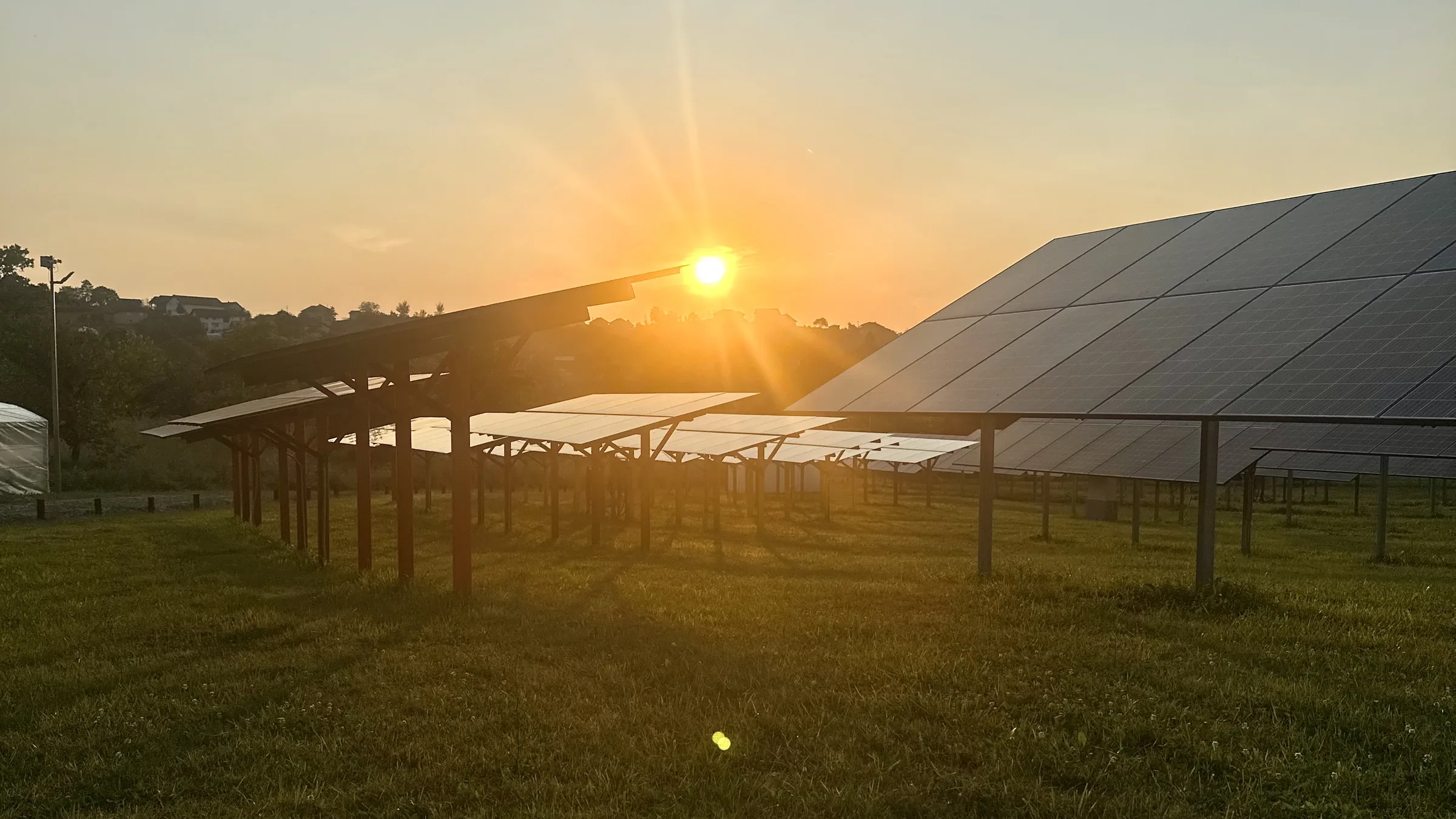
Energy asset control
Every fifteen minutes BESS Optimizer decides what your PV and battery plant does, from the day-ahead prices, the production forecast and the plant's own limits. We add it above the controller you have, or deliver it with the cabinet, a Schneider Electric PLC and a Comex IPC. Any battery, any inverter.
Start here
We add the optimiser above your existing controller and connect to the battery and the inverters you have, over Modbus and OPC UA, from any vendor. Nothing that works gets replaced.
Weeks
We supply the control point: the cabinet, a Schneider Electric PLC, a Comex IPC, the networking, BESS Optimizer and the commissioning. The battery and the inverters come from the vendor you choose.
Months, set by construction and grid energisation
BESS Optimizer
A linear programme decides, for every fifteen-minute slot of today and tomorrow, whether the plant charges, discharges, holds or curtails. It is deterministic: the same inputs give the same plan, and every decision can be read back afterwards.
Raduša yields about 30% more revenue than the same plant selling without our BESS Optimizer. Dispatch runs automatically; the operator can take manual control when the plant needs it.
The public dashboard publishes that comparison daily: the same plant, with the optimiser and without it, against the same market prices.
See today's result on the Raduša dashboardBehind the meter
A factory or a warehouse with rooftop PV and a battery faces the same fifteen-minute decision as a plant: charge from the roof or the grid, cover the evening from the battery, stay under the connection limit, and never pay for a cycle that does not earn one. The optimiser plans it from your tariff, your load and your production, and the control cabinet carries it out. In 2026 Croatia and Slovenia opened grant schemes for businesses adding a battery to existing PV; the case is strongest where power is dear and the roof is already there.
Start here
Stop exporting when the day-ahead price goes to zero or below. No battery required.
The control layer between the market and your battery plant, supplied with the hardware and the commissioning.
Scope
Which layer we supply and which stays yours, line by line — including the ones we deliberately do not take on.
| Layer | Supplied by Comex |
|---|---|
| BESS Optimizer | Dispatch plan every fifteen minutes, forecasting, market data, monitoring, alerting |
| Industrial PC | Fanless x86 node at the plant running the optimiser and the gateway |
| Controller | Schneider Modicon M262, IEC 61131-3 program, OPC UA server, when the plant has none we can use |
| Cabinet and wiring | Pre-wired, tested, DIN rail |
| Networking | Private VPN, mutual TLS per site, outbound connections only |
| Commissioning | Site works, sign-off, operator handover |
| Battery and inverters | Yours, from any vendor. We connect to them over Modbus and OPC UA; we do not supply them |
| Plant controller | Whichever controller the grid code requires is integrated, not replaced |
What we ship
We do not sell battery systems. The battery and the inverters are yours, from the vendor you choose, and different vendors can sit under the same control point. What arrives from us is the cabinet: a Schneider Electric PLC, a Comex IPC, the networking, pre-wired and tested, then commissioned against your connection conditions.
We do not sell the battery or the inverters, so we have no reason to prefer one make. The control point speaks the protocols the equipment already has, and different vendors can sit under one plan.
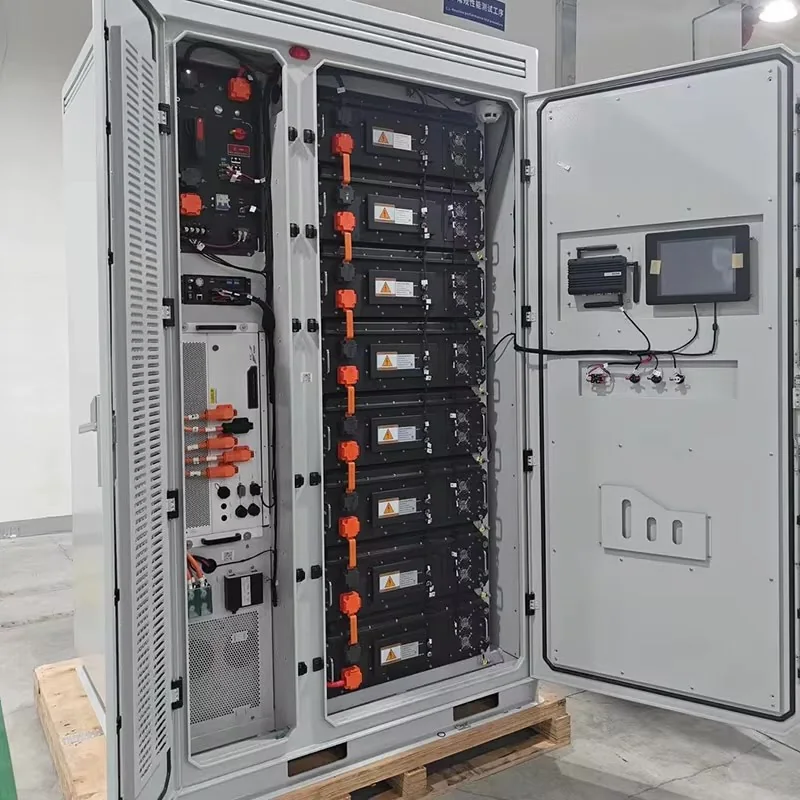
Our own storage at Raduša: the battery is the vendor's, the control on top of it is ours
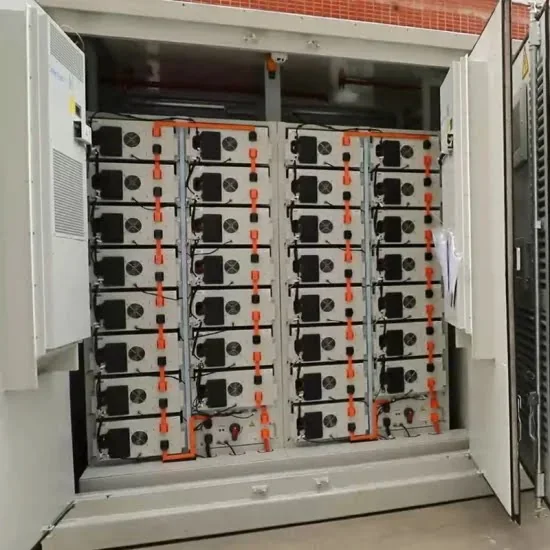
Inside the Raduša container, racked and cooled for continuous duty
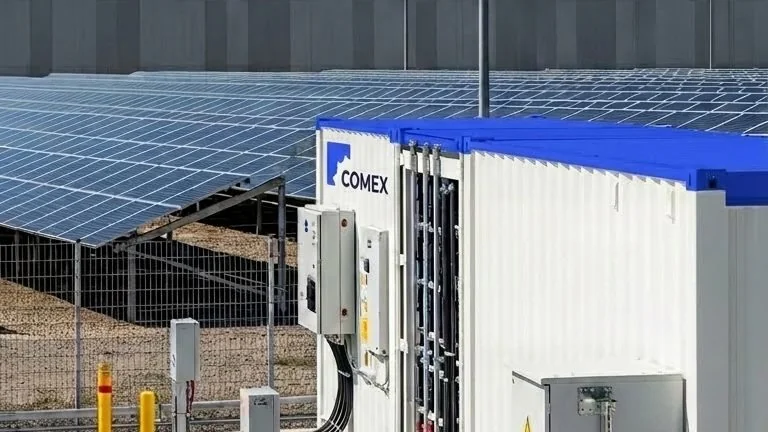
Installed beside the array and tied into the plant through the control point
The system
The plant's controller runs the plant. Everything above it, including our cloud, is advisory.
The Comex IPC at the plant holds the schedule and the configuration, so a lost link changes nothing about what the plant does next.
Broker-side last will, a cloud watchdog, and a controller-resident fallback that zeroes setpoints and holds charge. Verified by pulling the link.
Every setpoint is checked against inverter bounds and state-of-charge limits before it is written, verified after, and logged with who and when.
Power, state of charge, import, export, production and alarms, retained and queryable for any past interval.
Mutual TLS per site from our own certificate authority, outbound connections only. No inbound ports at any plant.
Proof
Raduša is our own solar plant with a battery of about 300 kWh and 125 kW. Our solutions are tested and verified on plants we own, and the monitoring that shows them running is public.
Read-only. It shows the plant as it is, including the days it does something we did not expect.
Continuity
It is a fair question to ask a company of our size, and the answer is contractual rather than reassuring: source code in escrow with release on defined events, interface and protocol documentation delivered with the plant, and a written handover procedure. Underneath that, the control path runs on open protocols end to end, OPC UA to the controller, MQTT over TLS to the broker, Modbus to field devices, so another competent integrator can take it over.
Taking a battery into NOSBiH's balancing market? That is a different programme: what is already proven on plants, what still has to be built for aFRR, and how long that takes.
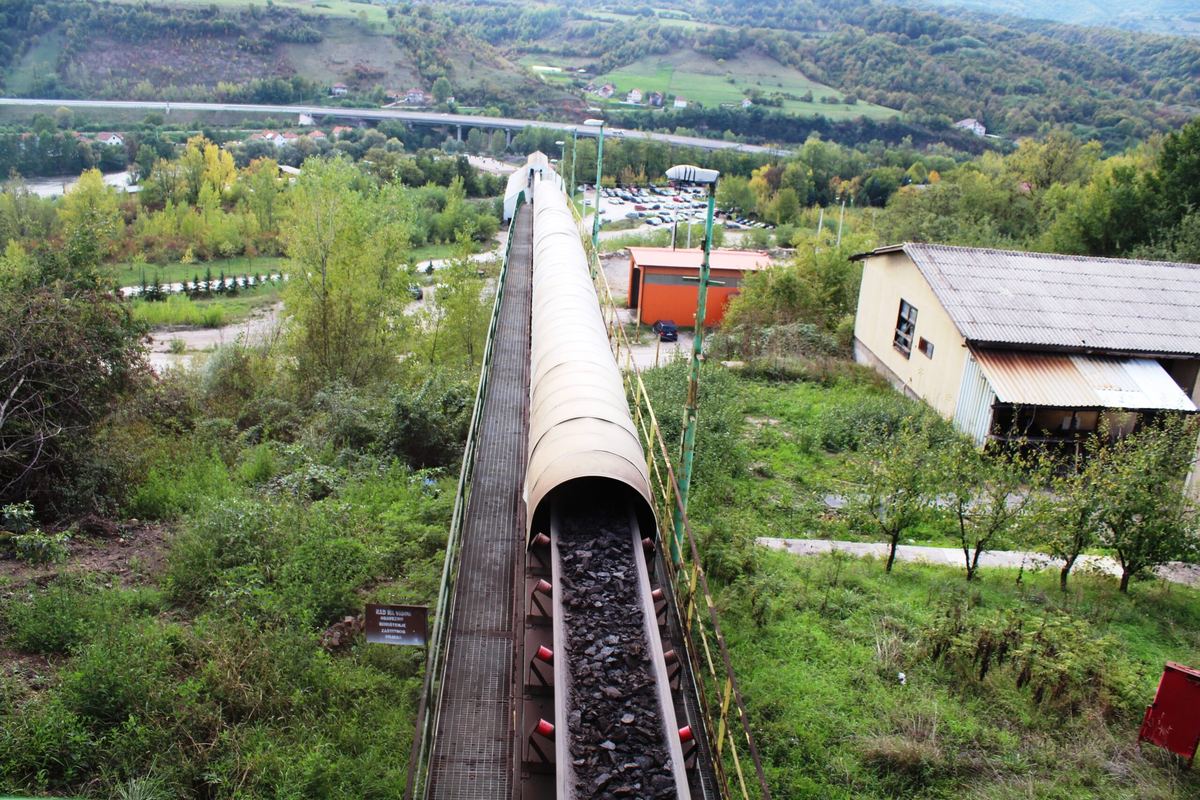
Proof, not projection
unplanned downtime during the changeover
At RMU Kakanj we rebuilt control, motor starting and supervision across two coal lines — without stopping production once.
Read the case studyNothing proprietary on the wire: OPC UA, MQTT over TLS and Modbus end to end.
On site
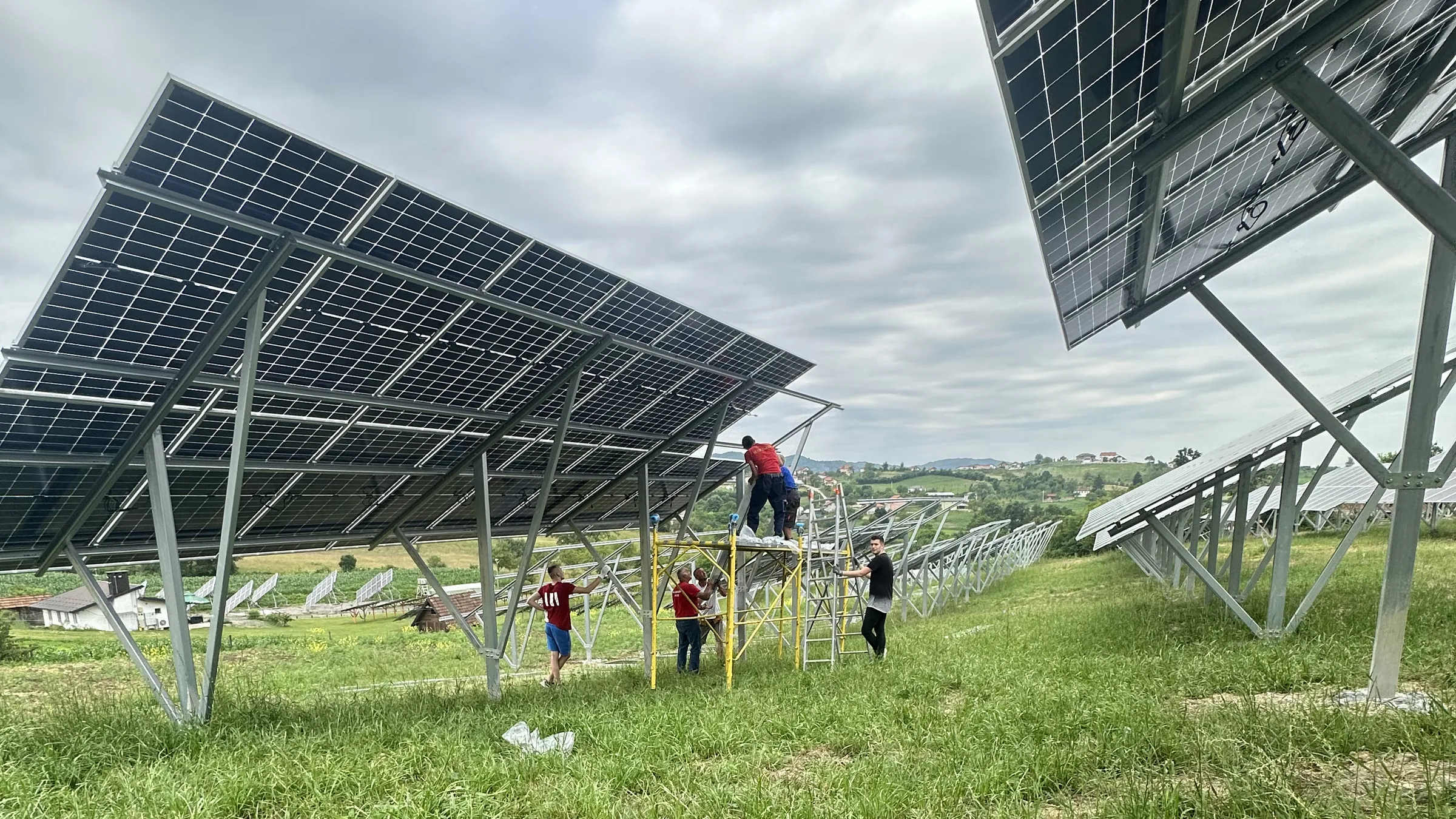
Our engineers install and commission on site, or a local contractor follows our specification. Either way we stay with you to the end.
For EPCs and integrators
If you sell and install storage, the optimiser and the control point are the part your battery vendor does not give you and your customer will ask about. We deliver them to your specification or ours, commission with your crew or ours, and stay out of your customer relationship. Ask for the partner scope and the commissioning checklist.
Talk to an engineer
Tell us the project stage, the connection status and the size if you know it. An engineer replies, not a sales sequence, and the first answer is whether we are the right contractor for it.
This website uses cookies
We use cookies for advertising, analytics and social features. The site works the same if you deny them.