Two coal lines, 0 minutes of downtime during the rebuild
RMU Kakanj replaced 14-year-old control electronics and analog supervision at its Vrtlište coal handling plant with an independent, dual-line SCADA system — installed without stopping production once.
An hour of downtime at this plant costs roughly 25,000 BAM (~€12,500) — which is what makes these zero minutes during the changeover a real saving, not just a statistic.
A 14-year-old nervous system running two lines that couldn't fail independently
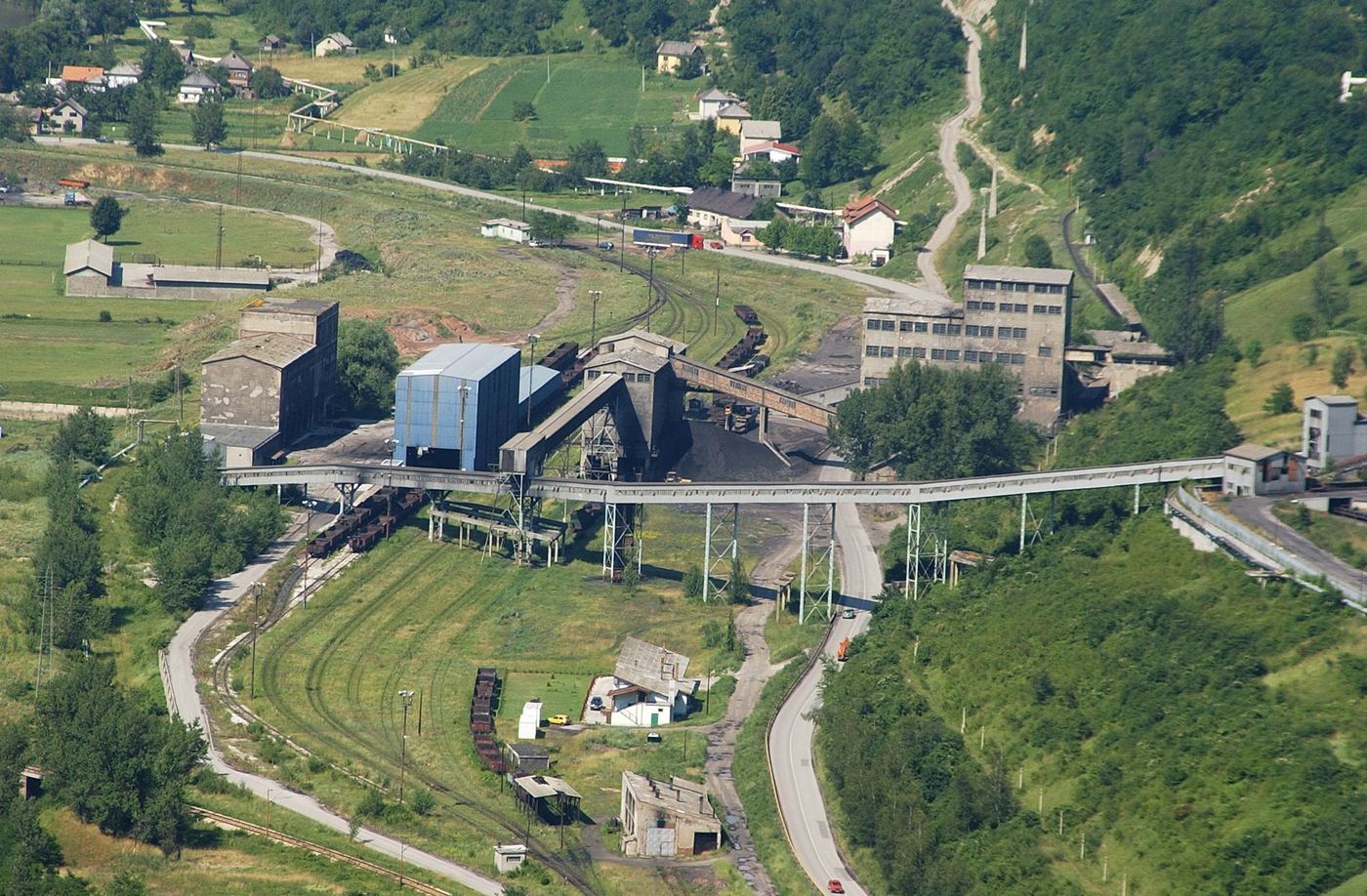
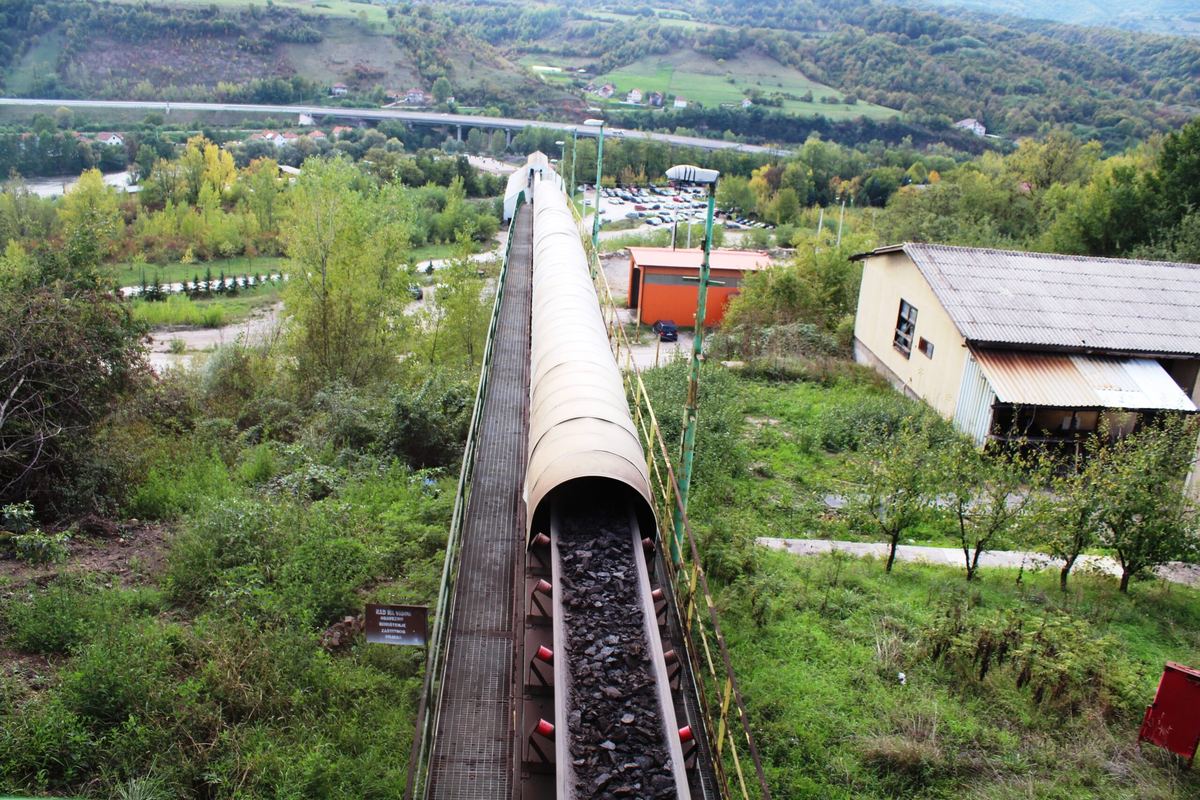
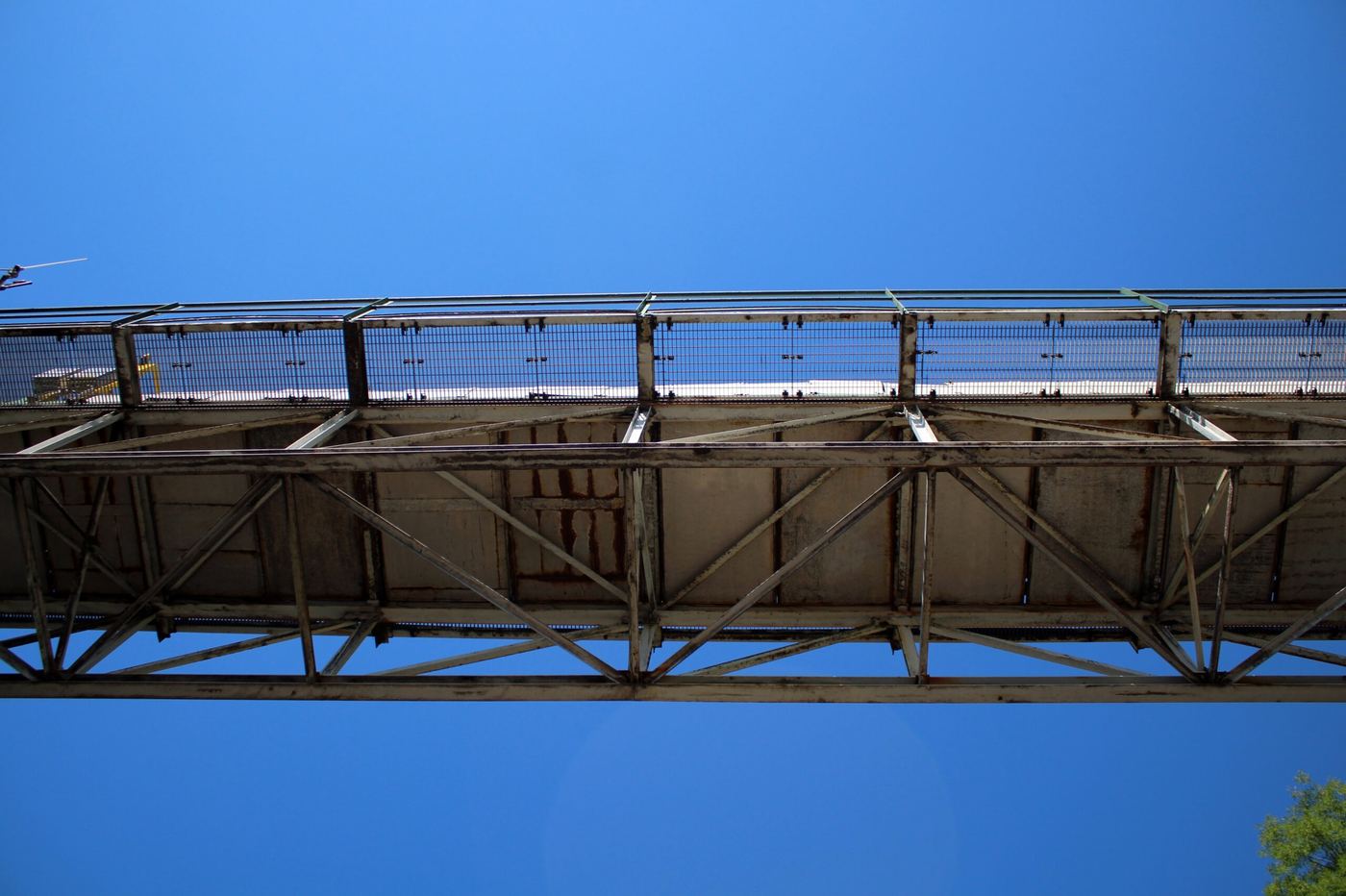
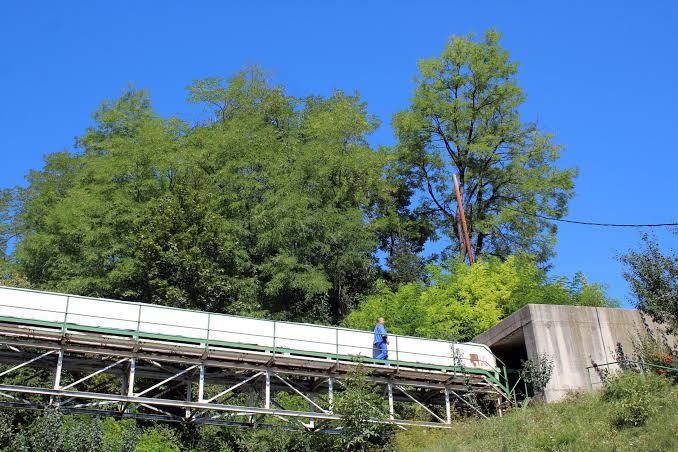
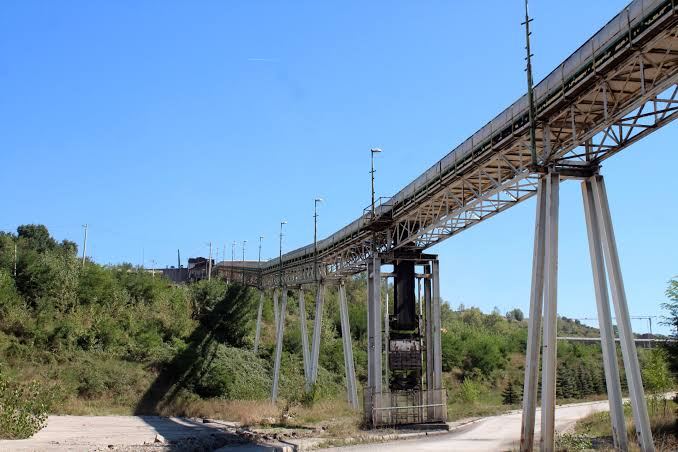
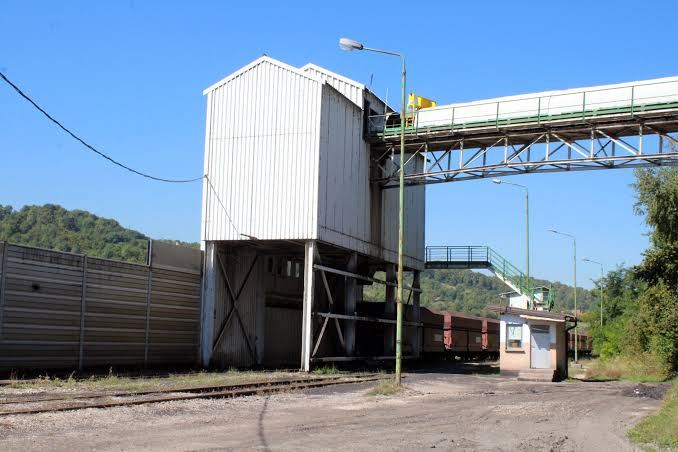
Vrtlište is where RMU Kakanj's coal becomes a shipment. Technological Line 1 receives and processes raw coal and stacks it onto an elevated storage pile; Technological Line 2 reclaims coal from that pile and loads it into rail wagons bound for Termoelektrana Kakanj, the thermal power plant next door. Long overland conveyor bridges — the steel gantries that define the site's skyline — carry material between every stage.
The transfer and handling system had been running for 14 years, and its electrical equipment had already outlived its rated 10-year service life. Reliability was degrading the way aging industrial electronics do: intermittent faults, slow manual diagnosis, and — the real risk — no separation between the two lines. A fault on one could take down the other, coupling risk across the whole plant instead of containing it.
Rebuilding control, motor starting, and supervision — line by line, without stopping either one
Comex worked alongside Spark Industry d.o.o. Zenica and RMU Kakanj's own Electrical Services Department to replace the plant's control cabinets, motor starting, and operator supervision from the field level up.
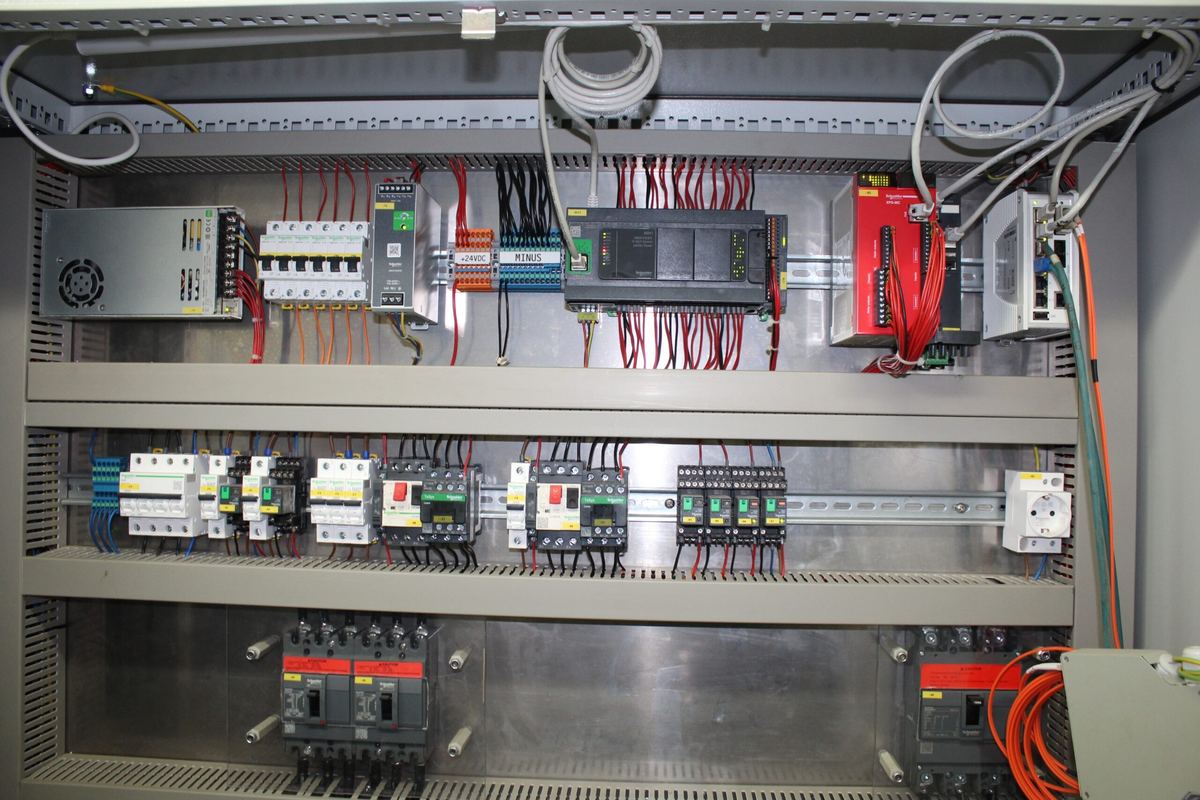
A Schneider Electric Modicon M241 PLC now sits at the core of each cabinet, backed by a Schneider XPS-MC safety relay for machine safety functions, DIN-rail motor protection breakers, and a managed network switch for the supervision layer above it.
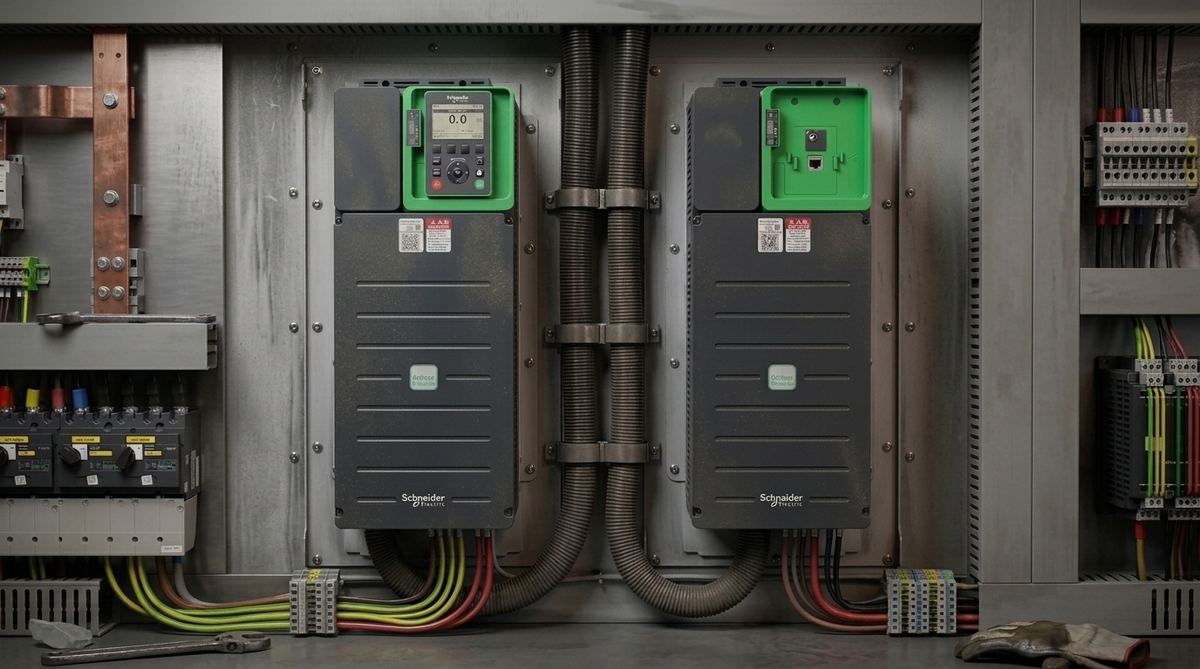
Every drive on site — chain conveyors, the screen, the picking table, the crusher, both main conveyors, the reduction conveyor, the mill — now starts through variable frequency drives, with one soft-starter covering the remaining load, in place of direct-on-line starting.
Controlled acceleration cuts mechanical shock loading on gearboxes and belts, gives operators real speed control instead of on/off, extends motor and switchgear life, and uses meaningfully less energy than DOL starting did.
The most consequential change is structural, not visual: Line 1 and Line 2 are now fully independent, electrically and logically. A fault on the reclaim/loading side has no path to the processing/stacking side, or back the other way — removing the plant's single biggest source of unplanned, cascading downtime.
Cabinets arrived fully assembled, pre-programmed and pre-tested. Installation was confined to non-operating windows, so the swap itself never required stopping production.
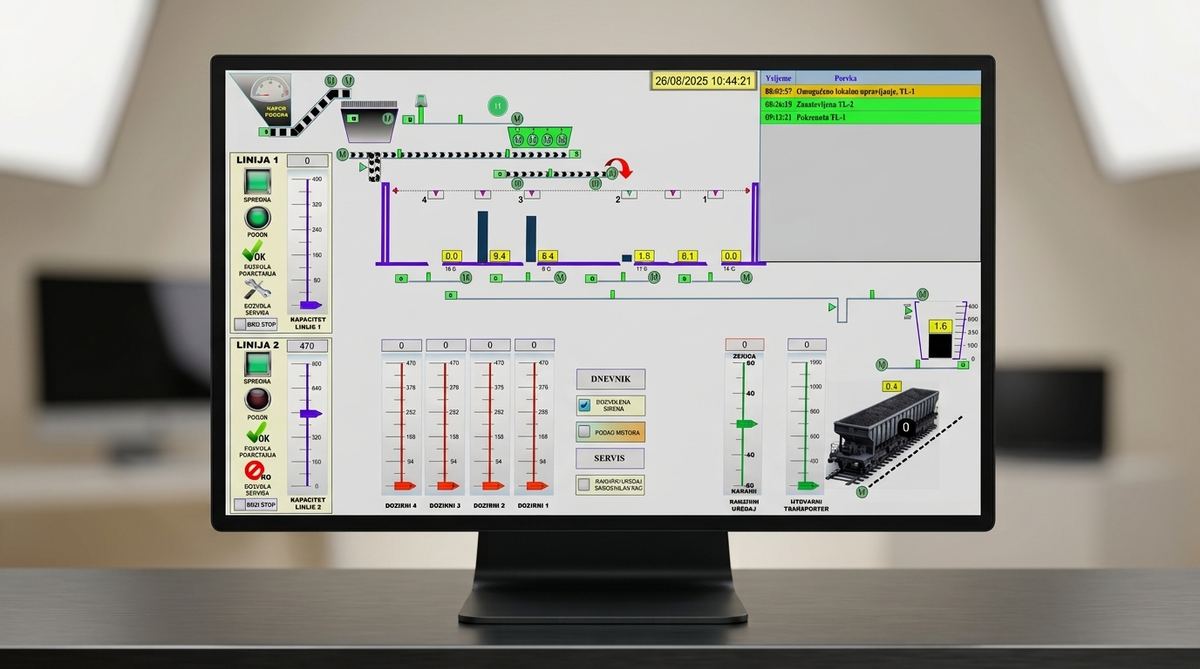
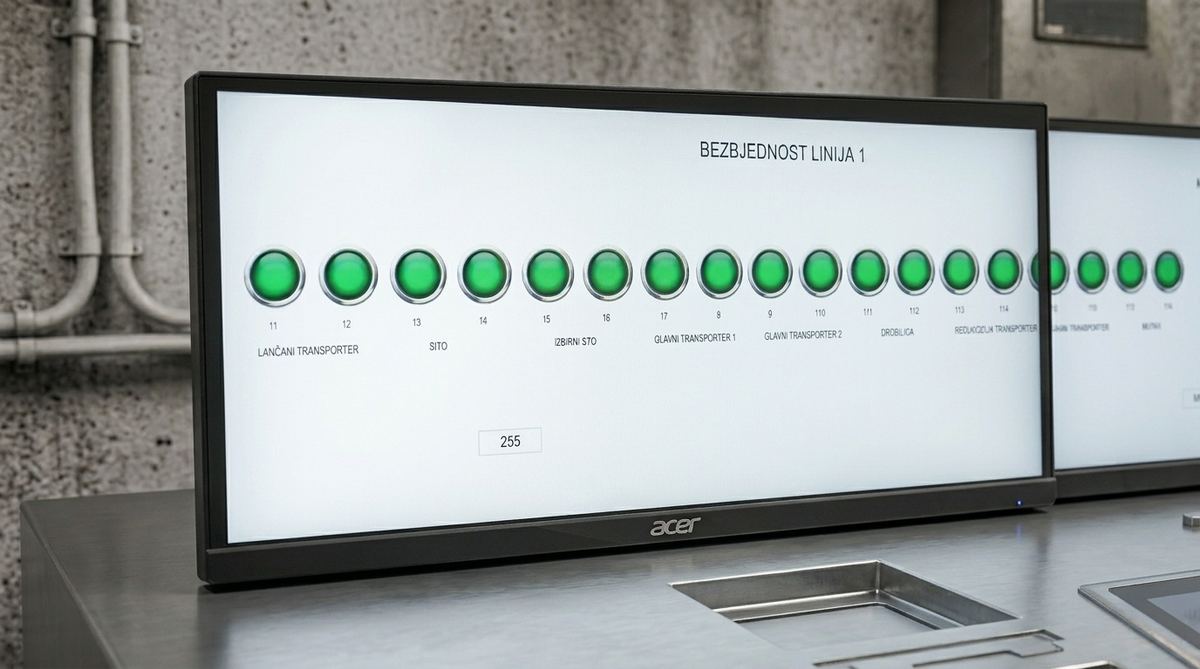
One screen per line, live status on every machine
Dispatchers and the electrical maintenance team now get a real-time, line-by-line view of the whole process — instead of tracing relay logic by hand when something trips.
The constraint
Zero downtime was not an aspiration — it was written into the tender
The mine feeds coal to the TE Kakanj power station, so the specification did not ask for a careful changeover. It allotted a fixed budget of outage, per cabinet, on non-working days, and set the rest to zero.
Maximum permitted outage
- GRO_AUT cabinet — transformer station2 days
- RDO_L1 and RDO_L2 cabinets — depot hall2 days
- KBO cabinet — control cabin1 day
- SCADA, HMI, PLC code and commissioning0 days
- DRB cabinet — crushing plant0 days
On top of that: no other plant in the mine could lose power for more than 48 hours, and the work could not stop the process of receiving, preparing and loading coal at any point. The five PLCs — one each for the crushing plant, the transformer station, both depot lines and the control cabin — had to come alive inside those windows.
And three things that shaped the engineering
The cabinets had to fit what was already there
New enclosures went into existing masonry compartments in the LV block, depot hall, crushing plant and dispatcher centre. Enlarging those rooms was explicitly ruled out, so the equipment schedule had to be designed around fixed dimensions rather than the other way round.
Not every machine may stop the same way
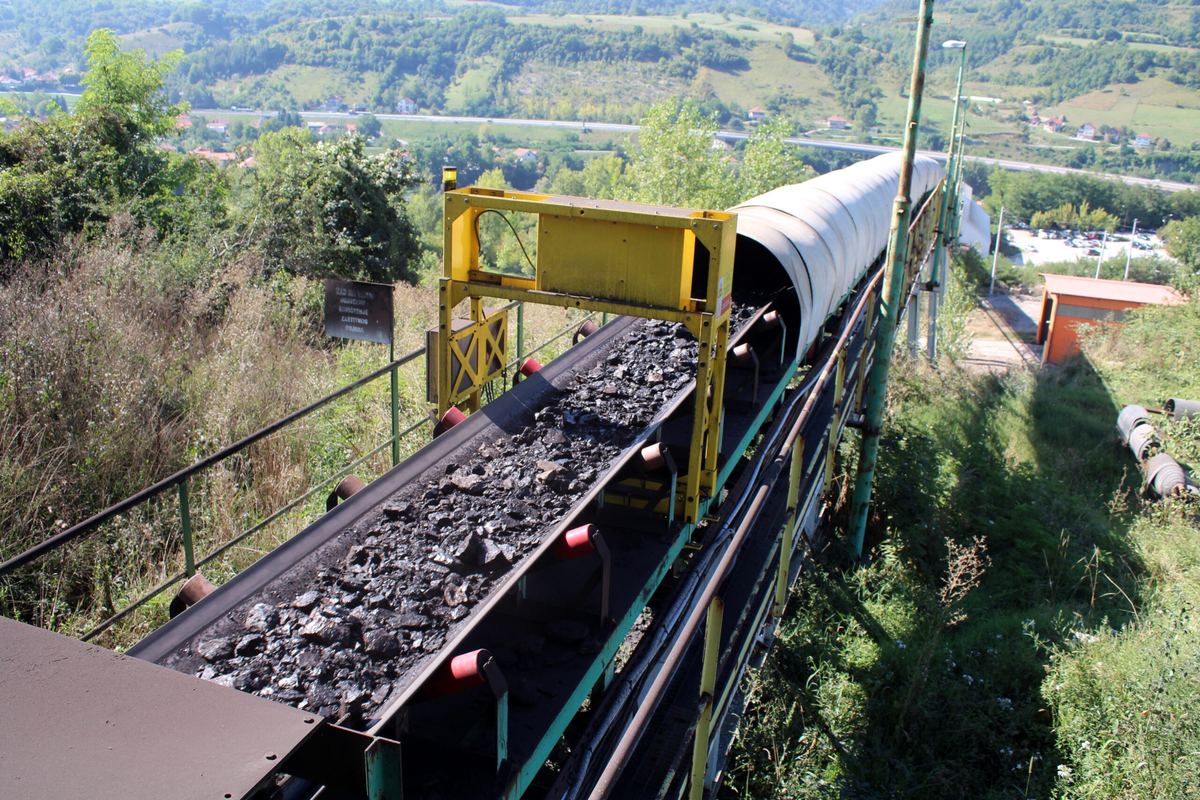
Most drives stop immediately — category 0 under IEC 60204-1. The main conveyor to the depot cannot: it runs downhill, so the soft starter injects DC into the motor windings to bleed off belt speed, and only after five seconds does the mechanical brake engage. That is a category 1 stop, and getting it wrong means a loaded belt running away.
The downhill conveyor generates
As coal load builds on that same negative gradient, the drive crosses into generator mode and returns up to 30 kW to the network. The control system has to expect a motor that sometimes pushes power back rather than drawing it.
What changed on the ground
- Full operational independence between Line 1 and Line 2 — no more cross-line cascading faults
- Faster fault diagnosis via real-time SCADA visualization, replacing manual, cabinet-by-cabinet troubleshooting
- Controlled VFD + soft-starter motor starting across every drive on site — lower mechanical stress, better motor and system protection, reduced energy use versus direct-on-line starting
- Zero unplanned production stoppages during the changeover itself
- A modernized platform on standard, supportable hardware, replacing equipment that had already run past its rated service life
“The project called for fully assembled electrical cabinets — pre-programmed and tested in advance — with the changeover carried out during non-operating hours, so production continuity was never disrupted.”
“This modernization has given us stable, reliable operation of the plant that receives, processes, and loads our coal. It's another example of our management staying aligned with modern technology in mining, and our strategic commitment to greater efficiency and safety.”
Project specification
| Client | RMU "Kakanj" d.o.o. — Pogon Vrtlište |
| Location | Kakanj, Federation of Bosnia & Herzegovina |
| Sector | Coal mining — receiving, processing & wagon loading |
| Scope | Full control & power electrical replacement, new SCADA, 2 technological lines |
| Delivered with | Spark Industry d.o.o. Zenica; RMU Kakanj Electrical Services (Pogon Vrtlište) |
| Control | Schneider Electric Modicon M241 PLC |
| Safety | Schneider Electric XPS-MC safety relay |
| Motor control | Schneider Electric Altivar VFDs (per drive) + 1 soft-starter |
| Supervision | Dual-line SCADA / HMI — process mimic, live status, event log |
| Cutover downtime | 0 minutes of production downtime — confined to non-working days |
The plant, in operation
Running critical process equipment on control hardware past its service life?
We plan modernizations around your production schedule, not the other way around — so the cutover itself never costs you uptime.